How We are Using Apologia's Physical Science
For 8th grade science we used the book Exploring Creation With Physical Science by Dr. Jay L. Wile, published by Apologia Educational Ministries. Exploring Creation With Physical Science is very readable, it pulled me in and I couldn't put it down for awhile. Dr. Wile's writing style is conversational and friendly.
 Second Edition Books at CBD
Ideally (but not necessarily) your child should have completed a pre-algebra course before starting this program. Officially, Dr. Wile recommends that the student should have finished 7th grade math before starting this course. Your student will need to be able to understand the math equations in Apologia's Physical Science.
Unit multipliers (click the link for a mini lesson) are the most commonly used math equation in the book. Sometimes called unit converters, these types of equations are important to master because the science student will see them often in the sciences. Dr. Wile explains how to use unit multipliers in Module 1 of the science book. Another equation in Exploring Creation With Physical Science is this one: F=(mass)(acceleration). I think the use of math in Apologia's Physical Science is a great benefit to the student.
Dr. Wile suggests that the student keep a science notebook. Any composition book would work well, our favorite are the sewn composition books. As an alternative, I have made lab sheets that might be useful for a science notebook or co-op class to go with the study of Apologia's Physical Science. However, if your child is going to continue studying the sciences in college, I recommend that, at some point, the student should use a sewn composition or a bound book and learn how to make a very good lab notebook by hand.
Lesson Plans: The lesson plans for Exploring Creation with Physical Science are on their own web page at: Schedules, Bookmarks & Vocabulary
LAB: From Apologia's Knowledge Base this article: [link opens in new window] Sample Physical Science Lab Report <- This link breaks frequently and the search is pathetic. If the link is broken type experiments in the search box
The Lab Sheets for Exploring Creation with Physical Science
Note: If possible, use a sewn composition books instead of the forms below.

 The Art Index.
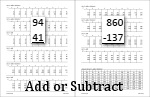 A new page with several math practice problem sets. Currently addition problems and a few subtraction problems. Each problem set has 10 problems and among the 8 printable files are 56 problems sets.
 Drawing Assignments
 Member's Login
 RSS Feed